

How Digi4Circular brought a live EU research question to 25 future engineers in Zlatibor, Serbia | November 2 to November 7, 2026.
Why recycled aluminium is never a blank page
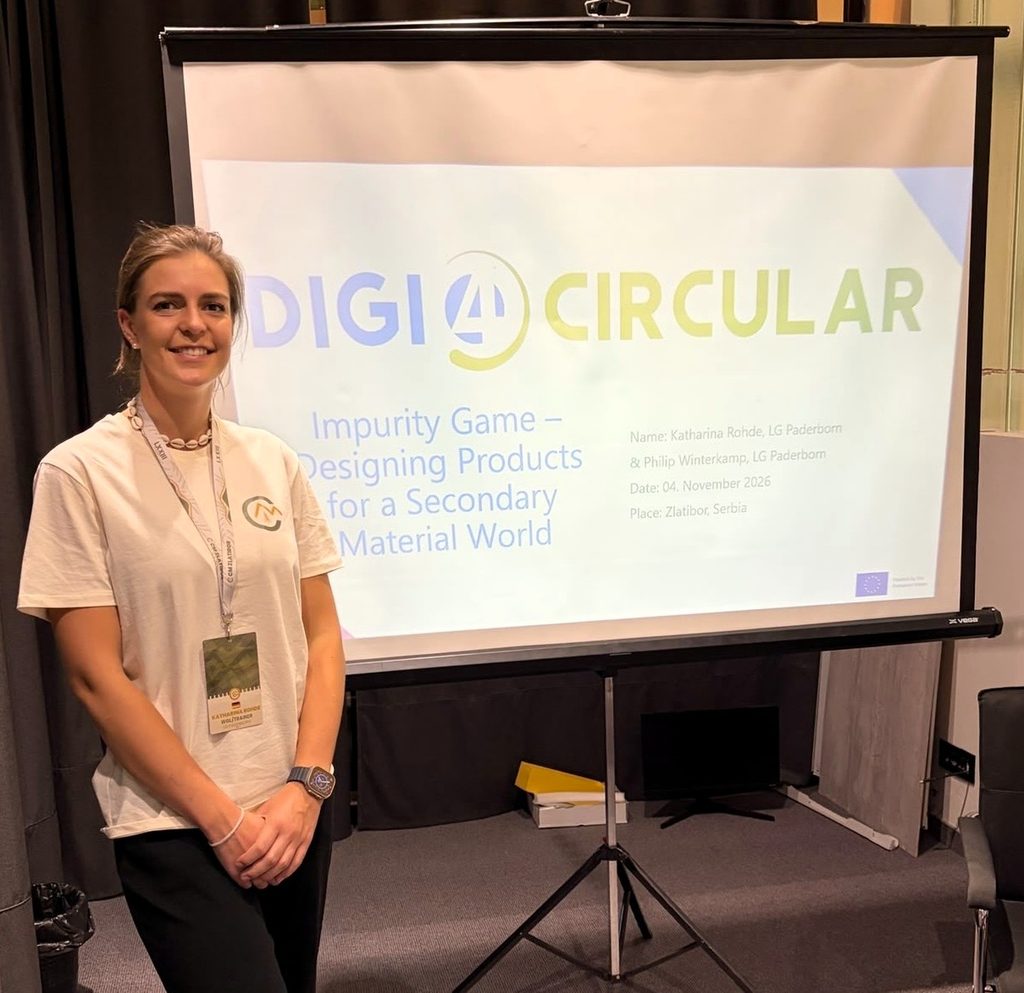
Last week, our project coordinator Katharina Rohde from Paderborn University took a very practical question to a mountain plateau in western Serbia: what can a designer actually do with recycled aluminium, when every batch carries traces of its previous life?
The ESTIEM Council Meeting in Zlatibor
Twice a year, ESTIEM (European Students of Industrial Engineering and Management) brings its members together for a Council Meeting.
The 73rd edition gathered more than 250 students from across Europe in Zlatibor, and Digi4Circular ran a working group there with 25 engineering and management students.
No slide marathon, instead: a game.
Katharina Rohde, Digi4Circular project coordinator, at the 73rd ESTIEM Council Meeting in Zlatibor, where she led the Impurity Game with 25 students.
Inside the Impurity Game
In the “Impurity Game”, participants became designers working with recycled aluminium. Every batch of material came with its own impurity profile, and every profile changed what the design could and could not do.
Within a few rounds, the students saw what engineers face every day: impurities shape design decisions from the very start, and made by intuition alone, those decisions quickly become guesswork. Translate material knowledge into clear rules, and the same decisions become fast and reliable. That is what Digi4Circular’s platform does, combining rule-based design workflows with machine learning, life cycle analysis and a Digital Product Passport that follows the product along the value chain.
ESTIEM’s Circular Economy Course
With its own Circular Economy Course project, ESTIEM is actively bringing circularity into engineering education, which makes it an ideal partner for sharing Digi4Circular’s approach with tomorrow’s engineers.
Katharina Rohde with Yavuz Selim Duran from Izmir University of Economics, current leader of ESTIEM’s Circular Economy Course.

For an alloy, a past is unavoidable. For a good design, it simply needs to be taken into account: preferably by rule, not by guesswork.